Newsletter Block
This newsletter signup form needs a storage option. Edit the block and enter a storage location via the Storage tab.

Publications
by and about Thomas Hylland Eriksen after November 2024
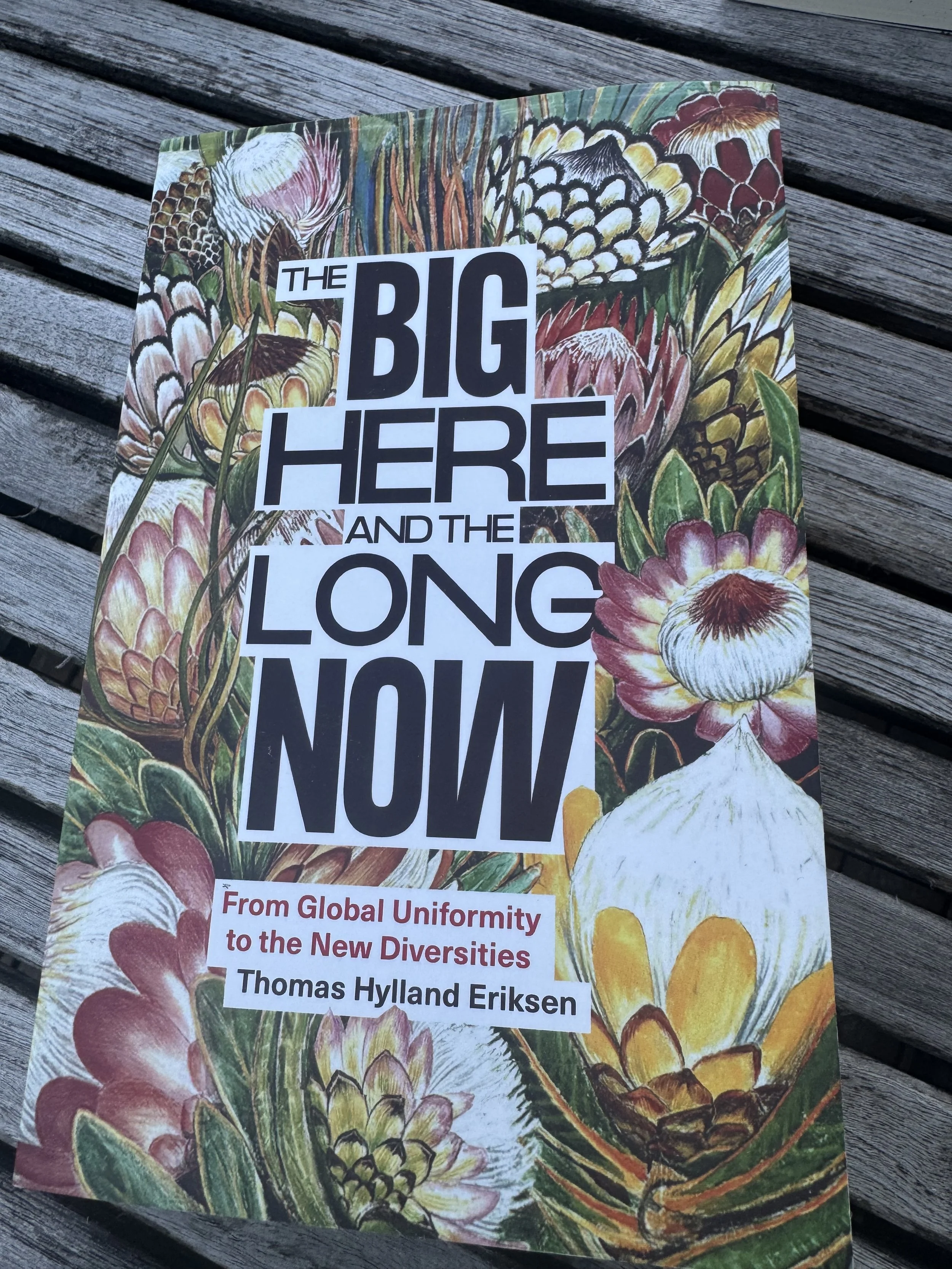
Front cover: Jonathan Kingdon, “Eighteen rare species of African sugarbush or protea”
By Thomas Hylland Eriksen (Pluto Press, 2026)
A spirited and engaging ‘big picture’ narrative of how we can reverse capitalism’s relentless drive towards biocultural homogeneity
For thousands of years, humanity’s story was one of diversification. Across centuries and continents our species proliferated new approaches to family and community life; to agriculture, economics, religion, artistic expression and self-understanding. Today, this process is in reverse.
Culturally and ecologically, we are witnessing an almost universal drive towards homogeneity and the loss of diversity. The global forces of capitalism have created a world riddled with overlapping crises, with any alternatives pushed into the margins, narrowing the scope for action just when we need it most. And yet its logic is never totalising: contrary to Margaret Thatcher’s famous mantra, there are many alternatives.
The Big Here and the Long Now begins with the story of how our world of efficiency, standardisation and development optimism first came into being; and how promises of progress, growth and prosperity have, in recent years, acquired a nasty aftertaste. The book concludes with hope, and an exploration of creolisation and hybridity. With biocultural diversity already being revived by activists and indigenous communities, from Manhattan to Micronesia, there are plenty of green shoots. Now they must be cultivated and nurtured.
Caroline Knowles, author of Serious Money
Finalising the manuscript for The Big Here and The Long Now was the last task Thomas Hylland Eriksen completed before he passed away in November 2024. The final version of the manuscript was dated only a couple of days before he died. His wife, Kari Spjeldnæs, had promised him to see the book through to publication, and the final editing of the book is a close collaboration between her and Pluto Press.
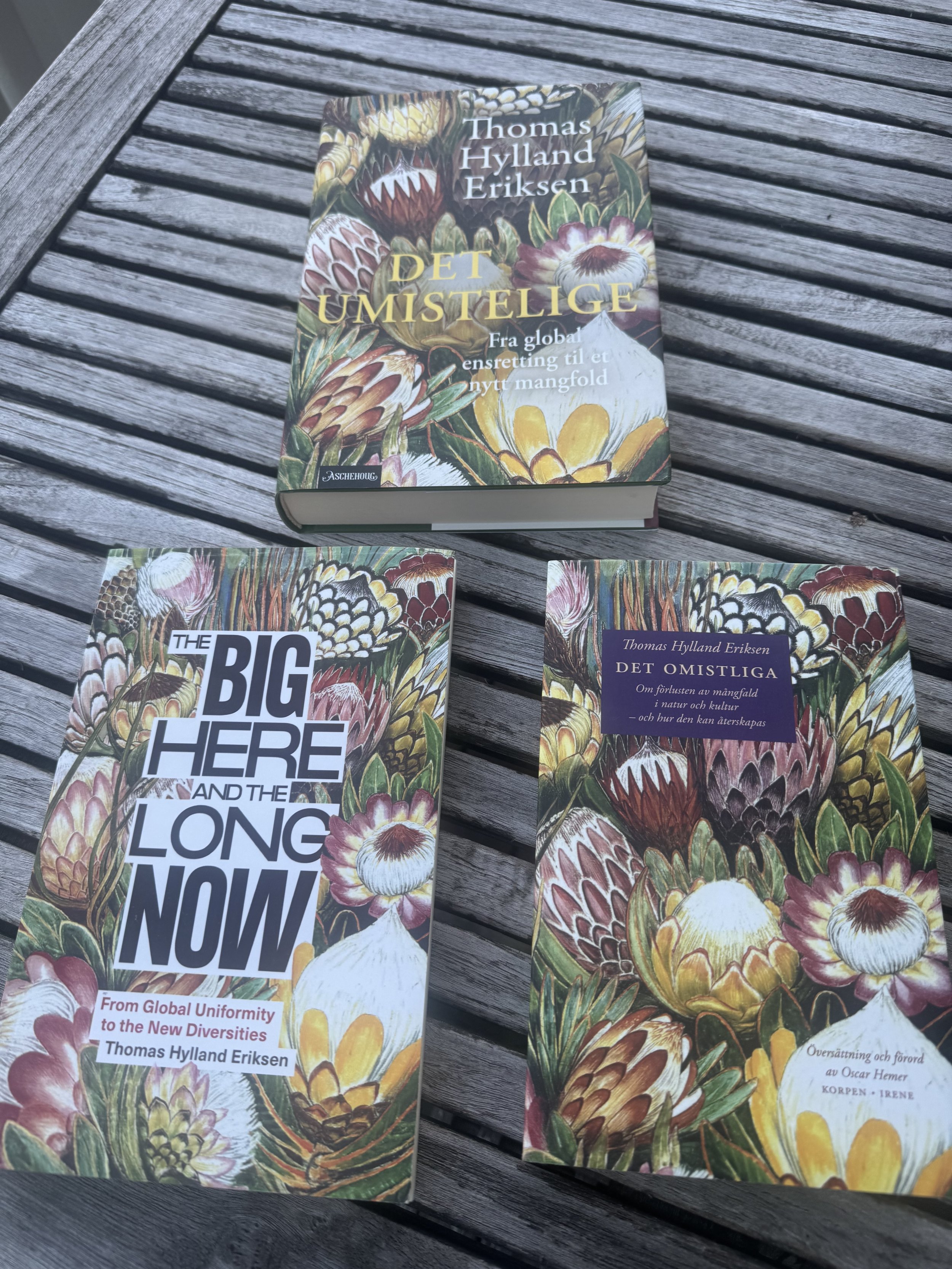
The Big Here and The Long Now is Thomas Hylland Eriksen’s English language version of the Norwegian title Det umistelige (Aschehoug, 2024). Oscar Hemer translated the Norwegian text into Swedish, Det omistliga (Korpen, 2025).
***
Editors:
Comprises 16 newly written chapters by leading historians, philosophers, and social scientists across the globe
Makes the case for a new direction of research: History and Philosophy of the Social Sciences (HPSS)
Provides an in-depth analysis of the classic work on the nature and methodology of the social sciences
https://link.springer.com/chapter/10.1007/978-3-032-08167-4_12
First Online: 30 January 2026, pp 243–261
Abstract
Anthropology, described by Eric Wolf as the most scientific of the humanities and the most humanist of the sciences, is today a diverse and in many ways sprawling academic discipline. Yet, it is united through a shared genealogy and methodology. This chapter charts the development of anthropological theory and methodology by focusing on three historical breaks or ruptures, as well as the resulting bifurcations. The first break is conceptual and consists in the abandoning of unilinear evolutionist thinking about cultural change, and the main protagonist is Franz Boas, whose historical particularism and methodological relativism contributed to a less biased and more rigorous approach to the diverse empirical materials. The second break is methodological and is associated with Bronislaw Malinowski. He emphasised the need to move beyond superficial survey work and distorting interviews, and laid out the principles of participant observation as the most accurate methodology for gaining knowledge about any society. The ethnographic method has subsequently become the most significant defining trait of social and cultural anthropology. The third, more recent break was expressed through the epistemological critique retrospectively known as ‘the Writing Culture turn’, where fundamental questions were raised about the validity of anthropological concepts, methods of comparison and theoretical constructions.
Each of these historical ruptures are accompanied by frictions, disagreements in the professional community and theoretical bifurcation. After Boas, neo-evolutionists tried to recover big questions formerly raised in cultural history; the fieldwork revolution, though less controversial, led to its own counterreactions in the shape of theoretical and comparative work; and the ‘postmodernism’ from the 1980s has similarly led to counterreactions among scholars who insist on the veraciousness of their objects of study.
Constructing the chapter around a few dramatic moments enables the author to demonstrate that anthropology is a community of disagreement, advancing through internal friction, and at the same time a unitary discipline based on fundamental, shared principles of a theoretical, epistemological and methodological nature. Since anthropology is a comparative, empirical discipline rooted in local realities, theoretical and methodological developments vary geographically. Some of this variation, though not all, are discussed in the chapter.
Thomas Hylland Eriksen was died at the time of publication.
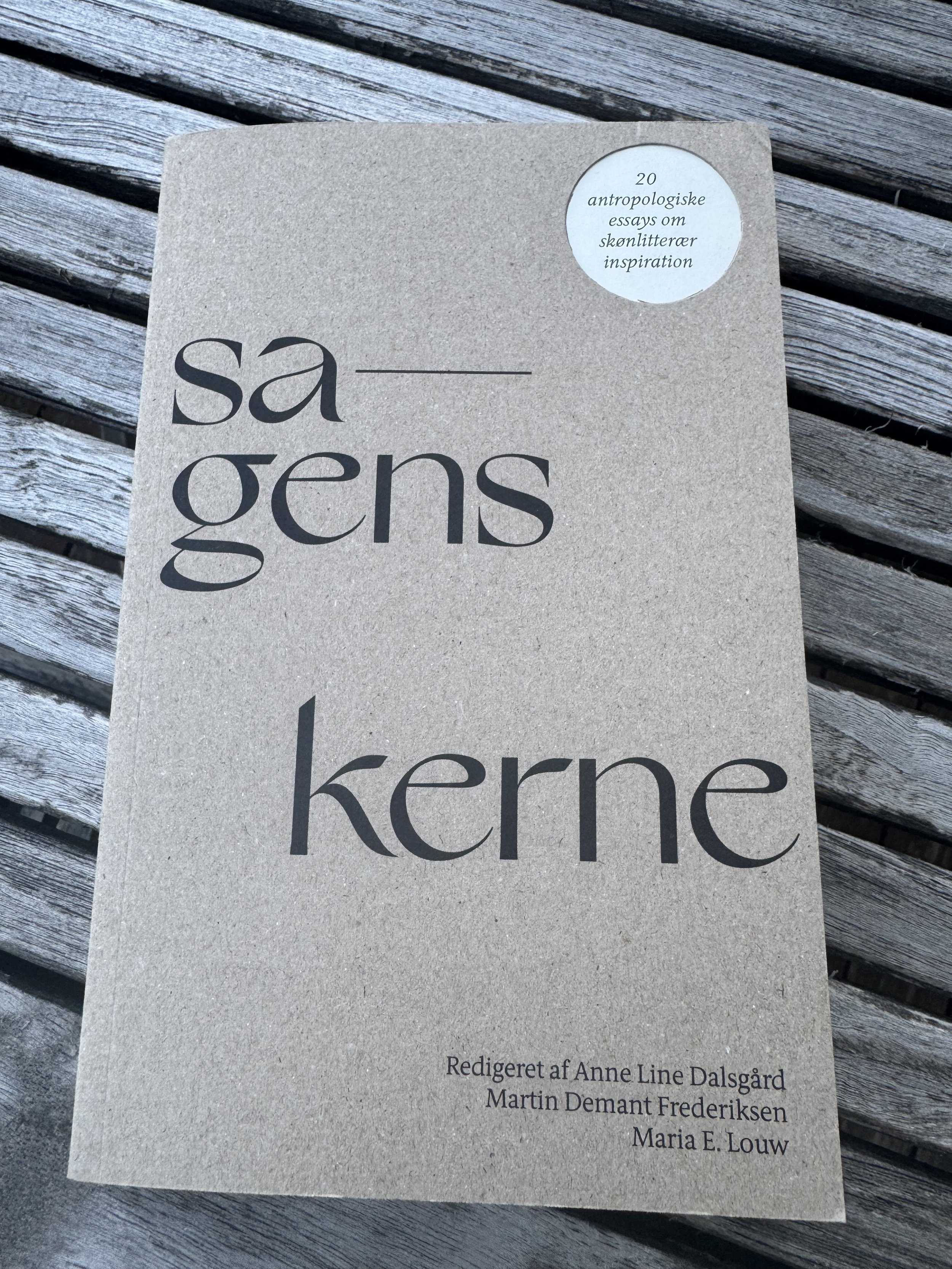
https://en.unipress.dk/udgivelser/s/sagens-kerne/
Edited by
Anne Line Dalsgård, Martin Demant Frederiksen and Maria Louw (Aarhus Universitetsforlag, 2025)
With contributions by
Thomas Hylland Eriksen, Helle Bundgaard, Ståle Wig, Nina Holm Vohnsen, Anders Sybrandt Hansen, Marianne Elisabeth Lien, Hanne Bess Boelsbjerg, Anne Line Dalsgård, Mikkel Rytter, Anders Emil Rasmussen, Marit Melhuus, Martin Demant Frederiksen, Trine Brinkmann, Aja Smith, Lotte Meinert, Sigrid Hjorth Wibe, Maria Louw, Bodil Selmer, Maria R.B. Odgaard and Inger Sjørslev
Indholdsfortegnelse
6 Sagens kerne 16 Lengselen etter et språk Thomas Hylland Eriksen —om Salman Rushdie 31 Når nok er nok Helle Bundgaard —om Claire Keegan 43 Et kampskrift mot uklar tale Ståle Wig —om George Orwell 51 Jeg vil skabe kaos, hvor der hersker orden Nina Holm Vohnsen —om Kurt Vonnegut 61 Det måner og andre muligheder Anders Sybrandt Hansen —om Jorge Luis Borges 74 At innfange forgjengeligheten Marianne Elisabeth Lien —om Jenny Erpenbeck 85 Når lys brænder ned Hanne Bess Boelsbjerg —om Søren Ulrik Thomsen 98 Undrende nærvær Anne Line Dalsgård —om Clarice Lispector 110 At skrive sandt Mikkel Rytter —om Ágota Kristóf 122 En verden i en vægtekst Anders Emil Rasmussen —om Pia Tafdrup 136 Å møte seg selv igjen Marit Melhuus —om Elisabeth Strout 149 Intens stilstand Martin Demant Frederiksen —om Erskine Caldwell 159 Basale regler om mennesker Trine Brinkmann —om Per Petterson 168 At digte et dyr Aja Smith —om Mathiesen, Bech og Malinowski 178 Der bor en ung pige Lotte Meinert —om Tove Ditlevsen 189 I landskabets sprækker Sigrid Hjorth Wibe —om Jón Kalman Stefánsson 199 Tajinisas hus Maria Louw —om Inger Christensen 208 Sætter verden i bevægelse Bodil Selmer —om Ivan Turgenev 220 I uhyggens skær Marie R.B. Odgaard —om Tove Jansson 229 At opfnde verdener Inger Sjørslev —om Ursula K. Le Guin
Pages 279-280: Table of Contents
Pages 281- 374: Special Section: Thomas Hylland Eriksen (1962-2024).
Guest Editor: Iver B. Neumann
Pages 281-286: Introduction: Studies in memory of Thomas Hylland Eriksen (1962-2024) – Iver B. Neumann
Pages 287-320: Staying with the tide. A story of climate (im)mobility in Fiji – Giulio Petix Panettiere and Thomas Hylland Eriksen
Pages 321-330: Small islands and the large temporal questions: Eriksen’s contribution to studies of island temporalities - Firouz Gaini
Pages 331-340: Thomas Hylland Eriksen, stories of Sápmi, anthropology and paradoxes of vision – Gro Birgit Ween
Pages 341-360: Paradise threatened: A look at Seychelles in the anthropocene era – Thérésia Penda Choppy
Pages 361-374: A Mauritian tribute to Professor Thomas Hylland Eriksen – Ramola Ramtohul
Follow link for the longer list of recent publications: https://www.sv.uio.no/sai/english/about/commemorative-page-thomas-hylland-eriksen/publications.html
The Creole Option: A Future For Diversity in Nature and Culture (2025) Spjeldnæs, Kari & Eriksen, Thomas Hylland
8. Knausgaard’s Norwegianness (2025) Eriksen, Thomas Hylland
What deep ecologist Arne Næss can teach us about the interdisciplinary nature of economics (2025) Tønnessen, Morten; Eriksen, Thomas Hylland & Karlstrøm, Jan
Loss and recovery of diversity in the Anthropocene (2025) Eriksen, Thomas Hylland & Ingold, Tim
Antropocen - menneskets tidsalder (2024) Mjaaland, Marius Timmann; Eriksen, Thomas Hylland & Hessen, Dag Olav
Dynamics of Political Domination in Africa: An Axel Sommerfelt Collection (2024) Sommerfelt, Axel Alfssøn; Sommerfelt, Tone; Jakoubek, Marek & Eriksen, Thomas Hylland
University of Oslo by Thorgeir Kolshus and Svein Stølen: https://www.sv.uio.no/sai/om/aktuelt/aktuelle-saker/2024/nekrolog-thomas-hylland-eriksen.html
Iver B. Neumann: https://www.fni.no/no/nyheter/minneord-thomas-hylland-eriksen-1962-2024
EASA by Hege Høyer Leivestad and Ana Ivasiuch: https://easaonline.org/obituaries/thomas-hylland-eriksen/
Ståle Wig: https://www.berghahnjournals.com/view/journals/saas/33/1/saas330108.xml
University of Bergen: https://www.uib.no/en/antro/174483/remembering-thomas-hylland-eriksen
University of Copenhagen by Susan Whyte, Kirsten Hastrup and Ayo Wahlberg: https://anthropology.ku.dk/dep/news/2024/remembering-thomas-hylland-eriksen-1962-2024
Chris Hann, Anthropology Today: https://rai.onlinelibrary.wiley.com/doi/10.1111/1467-8322.12941
Gabriella Elgenius: https://asen.ac.uk/blog/2024/12/05/thomashyllanderiksen/